

Tiger Eye


Tiger Eye
 Get photos/videos on Whatsapp
(Inclusive of all taxes)
SELECT YOUR RING
Select a ring to claim your free gift.
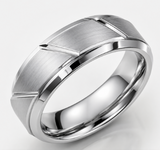
FREE Ring
Free
₹2,999
You unlocked a free ring!
The Ring option is selected. Choose your ring size to complete your free gift.

Tiger Eye
| Indian Size | Circumference | Diameter | ||
|---|---|---|---|---|
| Inch | mm | Inch | mm | |
| 1 | 1.61 | 41.01 | 0.51 | 13.1 |
| 2 | 1.64 | 42.70 | 0.52 | 13.3 |
| 3 | 1.69 | 42.90 | 0.54 | 13.7 |
| 4 | 1.72 | 43.60 | 0.55 | 13.9 |
| 5 | 1.76 | 44.80 | 0.56 | 14.3 |
| 6 | 1.81 | 46.10 | 0.58 | 14.7 |
| 7 | 1.87 | 47.40 | 0.59 | 15.1 |
| 8 | 1.89 | 48.00 | 0.60 | 15.3 |
| 9 | 1.92 | 48.70 | 0.61 | 15.5 |
| 10 | 1.97 | 50.00 | 0.63 | 15.9 |
| 11 | 2.02 | 51.20 | 0.64 | 16.3 |
| 12 | 2.04 | 51.90 | 0.65 | 16.5 |
| 13 | 2.09 | 53.10 | 0.67 | 16.9 |
| 14 | 2.14 | 54.40 | 0.68 | 17.3 |
| 15 | 2.16 | 55.10 | 0.69 | 17.5 |
| 16 | 2.22 | 56.30 | 0.70 | 17.9 |
| 17 | 2.24 | 57.00 | 0.71 | 18.1 |
| 18 | 2.30 | 58.30 | 0.73 | 18.5 |
| 19 | 2.32 | 58.90 | 0.74 | 18.8 |
| 20 | 2.37 | 60.20 | 0.75 | 19.2 |
| 21 | 2.39 | 60.80 | 0.76 | 19.4 |
| 22 | 2.44 | 62.10 | 0.78 | 19.8 |
| 23 | 2.47 | 62.70 | 0.79 | 20.0 |
| 24 | 2.52 | 64.00 | 0.80 | 20.4 |
| 25 | 2.54 | 64.60 | 0.81 | 20.6 |
| 26 | 2.59 | 65.90 | 0.83 | 21.0 |
| 27 | 2.65 | 67.20 | 0.84 | 21.4 |
| 28 | 2.67 | 67.80 | 0.85 | 21.6 |
| 29 | 2.72 | 69.10 | 0.87 | 22.0 |
| 30 | 2.80 | 71.00 | 0.88 | 22.3 |
Method 1 – Measuring with a Thread

Take a thin thread.

Wrap it around your finger where the ring will sit.

Mark the spot where the thread overlaps.

Measure that length with a ruler (in mm).
Method 2 – Measure using a Ruler

Take a ruler and ring that fits you.

Measure the diameter of your ring using a ruler, then match it with the chart to find your ring size.
Most orders are delivered in 7 - 10 days.
Prepaid orders are delivered on priority.- Origin : India
- Planet : Ketu
- Colour : Golden-brown with Silky Bands
- Shape : Oval
- Cut : Cabochon
- Composition : Natural
- Treatment : Unheated and Untreated
- Refractive Index : 1.540 – 1.550
Tiger Eye is a beautiful golden-brown gemstone known to boost confidence and courage. It helps overcome fear and anxiety, promoting strength and self-belief. Our natural, certified Tiger’s Eye stones are carefully selected for their rich color and quality.
Tiger eye is usually worn in Gold, Silver, or Panchdhatu rings or pendants. Panchdhatu metal can lose color with frequent contact with water, sweat, or perfume. Keep the ring dry to maintain its shine for a longer time.
- Boosts self-confidence and personal strength
- Enhances decision-making and mental clarity
- Promotes courage and resilience in difficult situations
- Protects against negative influences and energies

Not Sure What to Buy?
Not Sure What to Buy?
Talk to our expert astrologers for 1:1 guidance.
- Personalized gemstone recommendation
- Based on your birth chart & planet positions
- Tips to wear & care for your gemstone

Our Promise to You

Certified by Reputed Gem Labs

100% Natural & Authentic

Select from live photos & videos

Get exactly what you select
Reasons why Tiger Eye is Best For You?


Reasons why Tiger Eye is Best For You?


Gemstone Care Instruction

Cleaning
After wearing, wipe your gemstone with a soft, dry cloth to remove sweat & dust.

Avoid Chemicals
Remove your gemstone before using soap, detergent, perfume, or sanitizer. When not in use, store it in coconut or baby oil inside a soft box.

Be Careful
Don’t hit or scratch your gemstone. Avoid heavy work or sports while wearing it.

Recharge
Recharge it using a Selenite plate or by placing it in sunlight/moonlight.


Things you want to know before purchase
What is the return policy?
Our goal is for every customer to be totally satisfied with their purchase. If this isn't the case, let us know and we'll do our best to work with you to make it right.
Are any purchases final sale?
We are unable to accept returns on certain items. These will be carefully marked before purchase.
When will I get my order?
We will work quickly to ship your order as soon as possible. Once your order has shipped, you will receive an email with further information. Delivery times vary depending on your location.
Where are your products manufactured?
Our products are manufactured both locally and globally. We carefully select our manufacturing partners to ensure our products are high quality and a fair value.
Related products
Frequently asked questions
On which finger to wear Tiger Eye?
Which metal is best for wearing Tiger Eye?
How many ratti of Tiger Eye should I wear?
How do I know if Tiger Eye is the right gemstone for me?
Is Tiger Eye real and certified?